
Mining helped to build the economy of Michigan’s Upper Peninsula, but it also has courted controversy for its environmental and cultural impact.
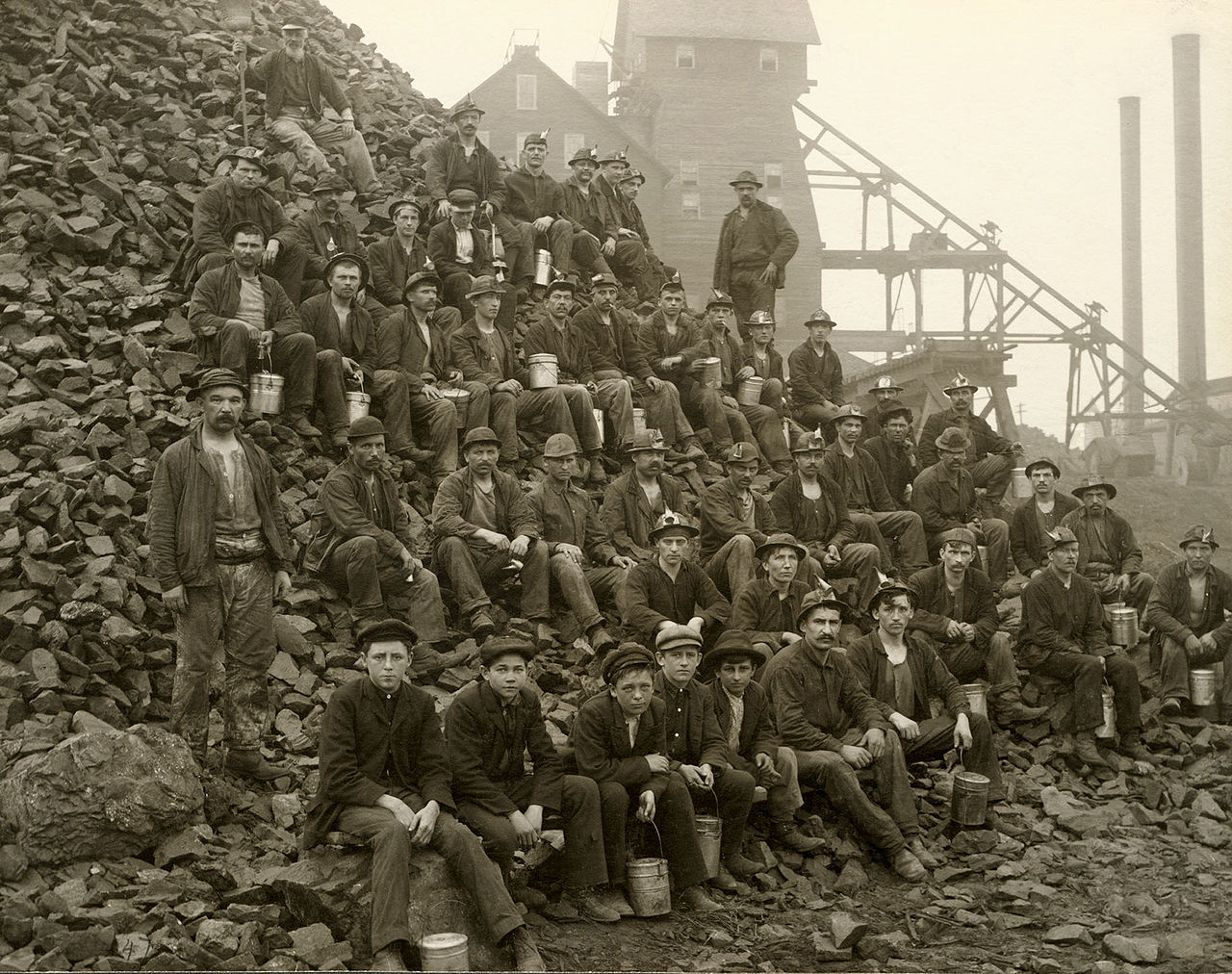
Miners pose with lunch pails in hand on a pile of “poor rock” (waste rock) outside of the Tamarack mineshaft, Photo by Keweenaw National Historical Park Archives, Jack Foster Collection via wikimedia.org (Public Domain)
Canadian company Aquila Resources’ Back Forty Mine has resurfaced long-standing disputes on how to reconcile the immediate economic needs of a community with the potential, long-term impacts mines and their waste leave on the land.
A significant point of concern among some residents and the Menominee Indian Tribe of Wisconsin is how Aquila plans to handle the inevitable waste material that will be produced during the mine’s operation.
Separating zinc and gold deposits from sulfide rock requires complex chemical interactions that ultimately end up as tailings: a combination of waste rock, water and toxic chemicals such as cyanide and arsenic.


